Updated 12/08/2026
No More Excuses – Let's Do This!
💸 Struggling to make ends meet?
🚗 Using credit cards to cover unexpected costs?
🎉 Wondering why your savings never seem to grow?
You didn't plan to end up in debt.
For most people, it happens gradually. A few unexpected expenses, a handful of impulse purchases, rising living costs, or simply never having enough set aside when life throws a surprise your way. Before long, debt becomes part of your monthly budget instead of a temporary setback.
The good news is that getting out of debt isn't just about earning more—it's about giving every pound a purpose. Once you start prioritising your money differently, your finances can begin working for you instead of against you.
That's where the 30/30/30/10 method comes in.
Rather than focusing only on cutting spending, it helps you structure your income so that paying off debt, building savings and covering life's essentials become your priority—not an afterthought.
No complicated theories. No unrealistic promises. Just a practical system designed to help you regain control of your money and build lasting financial stability.
Let's get started.

Why Most People Stay Stuck Financially
Most people think budgeting is just about spending less, but the real game-changer is how you distribute your income. If your money isn't working for you, it's working against you. There are three key areas where every dollar you earn should go:
- Necessary Bills: The essentials that keep your life running.
- Savings: The guarantee that future financial problems won’t ruin you.
- Debt: The hardest thing to get rid of—but only if you don’t have the right strategy.
Many people still prioritize luxuries even when living paycheck to paycheck, which makes financial stability impossible. The key is to structure your budget in a way that supports long-term success rather than just short-term gratification.
The Hidden Trap:![]() How Small Spends Keep You Broke
How Small Spends Keep You Broke
Ever notice how easy it is to justify spending money on things you don’t really need? You walk through town, thinking you’ll just window shop, and suddenly £250 is gone on things you barely remember buying.
It’s all just a tenner here, £19.99 there, two cushions for “only” £25—these small, seemingly harmless purchases add up fast. And here’s the kicker: Most of the debt you’re paying off today came from these “great deals” and impulse buys.
It’s the “I deserve it” mindset, the “it’s on sale” trap, the “everyone else is doing it” excuse. But where does it leave you? Stuck in a cycle where your money disappears before you even realize it.
💡 First, awareness. Then, decision. Finally, action.
If you really want to get out of debt, start by recognizing these spending patterns. It’s not about never buying anything—it’s about making conscious, controlled choices.
✅ Step 1: Recognise where your money is actually going.
✅ Step 2: Take control by using the right tools to track and manage your finances.
Free tool
Plan your final debt date. See exactly how much interest you can save — and how much faster you'll be free — by paying more than the minimum each month.
→ Use the Free Debt CalculatorTo help you get started, grab one of our free budgeting template below, or upgrade to a fully automated finance tracker designed to simplify everything:
🔹 One-Tab Monthly Expenses Tracker in Excel, or Google Sheets– A straightforward budgeting template with automated analysis to help you track your spending habits in real-time.
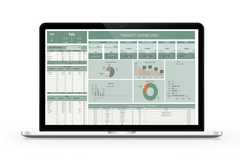
🔹 Monthly & Yearly Finance Dashboard in Excel– A complete financial system featuring an automated breakdown of your debt, savings, bills, net worth, and more, helping you see the full picture of your financial health.
Whichever you choose, the key is to start tracking your money today.
The 30/30/30/10 Budgeting Rule – A Faster Way to Financial Freedom
Instead of focusing on “wants” first, 30/30/30/10 prioritizes what actually builds wealth while still allowing for fun.
- 30% for Housing: Rent/mortgage payments.
- 30% for Necessities: Utilities, groceries, transportation, insurance.
- 30% for Financial Goals: Savings, investments, and aggressively paying off debt.
- 10% for Personal Spending: Fun money, entertainment, shopping.
🔹 Why This Works:
- You prioritize debt and savings, meaning you stop living paycheck to paycheck.
- You still get 10% for fun, but your money is working for you.
- Your emergency fund builds faster, so unexpected expenses don’t wreck your budget.
Free tool
Not sure whether to tackle debt or savings first? Put your numbers in and see which move saves you the most.
→ Run Your NumbersRealistic Adjustments: How to Transition from 50% to 30% Housing
One of the biggest questions is: How do you reduce your housing costs from 50% to 30%? The truth is, it will not work for everyone, but there are realistic adjustments to consider. Depending on your debt situation, a temporary inconvenience is better than ongoing, never-ending debt.
- Downsise Temporarily – Consider moving to a more affordable rental or a smaller space while you aggressively pay down debt.
- House Hacking – If you own property, renting out a spare room or turning part of your home into an Airbnb can offset your housing costs.
- Relocation – If remote work is an option, moving to a lower-cost area can make a dramatic difference in your financial flexibility.
- Co-Living – Sharing a place with a roommate (even temporarily) can free up hundreds per month to put toward savings and debt.
💡 For singles, housing should already be around 30%—or at least closer to it. And let’s be honest, singles are also the most guilty of overspending on luxuries. (It’s a joke… sort of!)
Not everyone will be able to adjust immediately, but the goal is to start looking for opportunities to reduce housing costs rather than accepting them as fixed expenses.
The Bottom Line
The choice is simple: keep struggling with the same old budgeting methods or take control with a system that actually works.
If you’re tired of barely making progress, 30/30/30/10 is your way out. It’s designed for people who want to:
✅ Get out of debt faster
✅ Build savings without waiting years
✅ Stop stressing about unexpected expenses
✅ Still have money left for enjoying life
And remember: Luxuries should be temporarily reduced if you’re serious about gaining financial control. It’s not about depriving yourself forever—it’s about making short-term sacrifices for long-term freedom.
This isn’t just about budgeting—it’s about freedom. Give it a try for a month and see the difference. Your future self will thank you. 💪💰